As Amazon Associates, we earn from qualifying purchases. This means we may receive a small commission at no extra cost to you if you click through and make a purchase.
The Jackery Explorer 2000 Plus is a heavy-duty portable power station designed to provide reliable electricity during severe weather blackouts, off-grid RV trips, and demanding outdoor adventures. Built around a durable lithium iron phosphate battery pack and a high-capacity inverter, this unit delivers enough continuous energy to run demanding appliances like air conditioners, large power tools, and full-sized domestic refrigerators. If you are comparing heavy-duty models like the jackery explorer 3000 v2 or seeking a high-capacity backup solution, our verdict is simple: it is an exceptionally sturdy, straightforward power hub that removes the intimidation factor from high-capacity backup power while delivering outstanding output for off-grid living.
This unit is ideally suited for homeowners preparing for multi-day emergency outages, RV travelers who want clean electricity without running a noisy gas generator, and campers seeking dependable high-capacity energy. However, casual day-trippers and lightweight backpackers should look elsewhere, as its substantial physical bulk makes it far too heavy for casual park outings or mobile day packs where a pocket-sized device like the jackery bolt 6000mah portable charger would be far more appropriate.
Jackery Explorer 2000 Plus at a Glance
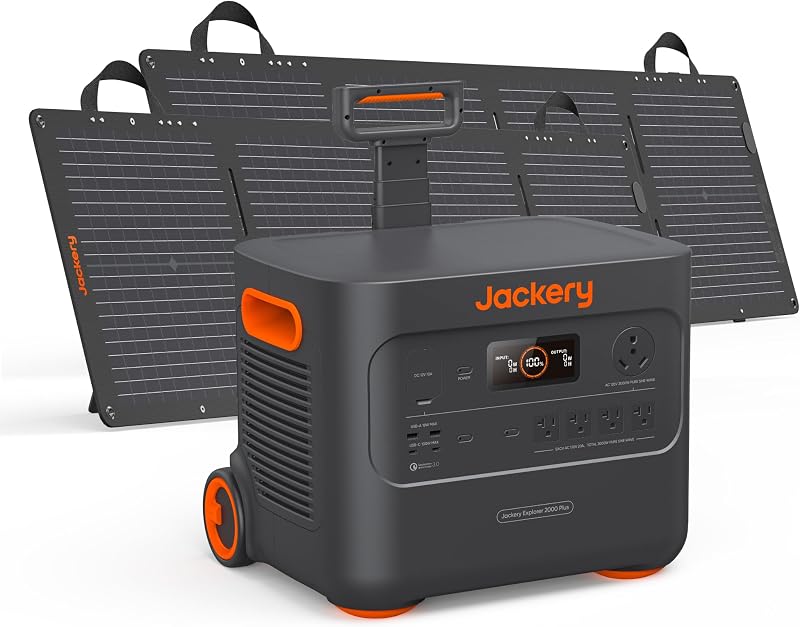
| Feature | Specification |
|---|---|
| Battery Capacity | 2,042.8 Wh |
| Continuous Running Output | 3,000 W |
| Battery Chemistry | LiFePO4 (Lithium Iron Phosphate) |
| Rated Battery Lifespan | Up to 10 years |
| AC and Solar Recharge Time | Approximately 2 hours |
| Total Power Outlets | 4 |
| Voltage | 240 V AC |
| Unit Dimensions | 19 x 14.1 x 14.7 inches |
| Total Weight | 82 lbs |
| Model Number | JE-2000C |
Power Delivery and Everyday Appliance Support
When assessing any jackery 3000w power station, the primary consideration is whether the unit can run demanding household and outdoor appliances without triggering circuit overloads. The Jackery Explorer 2000 Plus delivers a continuous 3,000-watt running output alongside a generous 2,042.8 watt-hour storage capacity. For first-time buyers unfamiliar with electrical terms, running wattage represents the steady power an appliance draws to remain operating, while watt-hours measure how long that power can flow before the internal cell requires a recharge. With 3,000 watts of sustained energy, this unit easily handles heavy electrical loads such as portable air conditioners, electric cooktops, sump pumps, space heaters, and large refrigerators.
The hardware layout incorporates 4 total power outlets, allowing families to connect multiple essential electronics at the exact same moment during a storm. Rather than juggling extension cables or picking between a medical device and kitchen equipment, users can plug in crucial hardware simultaneously. The system also handles 240-volt electrical current, ensuring steady distribution across connected gear. Compared to smaller entry-level units such as the jackery explorer 300 portable power station, which is tailored toward personal tech and compact accessories, this large power station operates on an entirely different scale built for critical home circuits and heavy appliances.
Long-Term Durability and Battery Cell Safety
The core foundation of the Jackery Explorer 2000 Plus is its advanced LiFePO4 battery chemistry, which represents a massive upgrade over traditional lithium-ion formulations. LiFePO4, or lithium iron phosphate, is celebrated across the energy storage industry for its chemical stability, thermal resilience, and extended service life. The manufacturer rates the jackery explorer 2000 plus battery lifespan at up to 10 years of regular use. To achieve this longevity, the system utilizes proprietary ChargeShield fast charging technology alongside a specialized Smart Shallow Charging Mode, which protects the inner cells against thermal degradation and extends overall battery longevity by up to 50 percent.
Safety is especially important for beginners keeping a massive battery inside living rooms, RV bedrooms, or tents. The internal battery management software constantly monitors temperature thresholds and electrical resistance across the cells. High-temperature resistance prevents the core pack from overheating in hot climates, while an integrated cooling system increases heat dissipation efficiency by 30 percent compared to standard thermal structures. With multiple automatic protections against short circuits and abnormal currents, first-time owners can keep the unit plugged in without worrying about hazardous thermal runaways or ruined electronics.
Recharging Speeds from Wall Outlets and Solar Panels
A massive battery reserve is only practical if you can replenish its energy quickly after an outage or long day outdoors. The jackery explorer 2000 plus solar charging setup and AC wall charging infrastructure are engineered for rapid turnaround. When connected to a standard AC wall outlet, the system pulls high-speed current safely, achieving a full 100 percent recharge in approximately 2 hours. This rapid replenishment is critical when preparing for approaching storms, giving homeowners the ability to top off over two thousand watt-hours of reserve electricity on very short notice before grid power goes down.
Off-grid charging is equally capable for campers and outdoor adventurers. When paired with 6 SolarSaga 200W solar panels under ideal sunny conditions, the battery can complete a total recharge from zero to one hundred percent in roughly 2 hours. Even if you deploy a more compact solar array or separate panels like a jackery 300 solar panel, the internal charge controller optimizes incoming sunlight efficiently. Fast solar capture means outdoor adventurers can run their essential gear during the evening, set out panels at daybreak, and have a fully replenished battery reserve by lunchtime without needing fossil fuels.
Expandable Battery Architecture and Parallel Power
One standout capability of this system is its modularity, which allows owners to start with a standalone unit and scale their energy capacity over time. Through the jackery explorer 2000 plus expandable battery system, the base capacity of 2,042.8 watt-hours can scale smoothly from 2kWh up to 12kWh by adding up to 5 optional battery expansion packs. This modular expansion allows households to customize their backup reserves according to their emergency preparedness plans, adding auxiliary storage modules as their home power needs grow.
For users requiring maximum commercial-grade backup, two Jackery Explorer 2000 Plus units can be connected in parallel. Linking two main units together creates an immense 24kWh energy storage bank while doubling continuous output capacity to 6,000 watts. This parallel configuration transforms the setup from a mobile power station into a whole-home emergency power center capable of handling concurrent high-draw loads during extended multi-week grid interruptions. While mid-range choices like the jackery explorer 1000 v2 portable power station offer balanced portability for weekend trips, this expandable architecture gives serious users true off-grid independence.
Portability, Build Quality, and Outdoor Practicality
Operating the jackery explorer 2000 plus for camping or outdoor recreation requires understanding its physical dimensions and mobility trade-offs. The unit measures 19 inches long, 14.1 inches wide, and 14.7 inches high, with a total weight of 82 pounds. While 82 pounds is substantial for a single person to lift, the heavy-duty outer casing is engineered to withstand the vibrations, dust, and physical bumps typical of vehicle transport and campsite setups. It provides an emission-free, near-silent alternative to traditional gas-powered generators, making it compliant with strict national park noise guidelines and safe for indoor use.
Beginners will appreciate that this station requires zero fuel mixing, oil changes, carburetor maintenance, or pull cords. The clean electric interface and clear digital indicators allow anyone to inspect incoming solar wattage, outgoing consumption, and remaining battery percentage at a glance. As a portable power station for beginners, it eliminates the operational barriers that often frustrate new generator owners, providing push-button power that works seamlessly straight out of the box.
Jackery Explorer 2000 Plus Pros and Cons
Two swatches, side by side. Everything on both sides is read from the product listing and from buyer feedback – nothing here comes from handling the product.
What works
- High 3,000-watt continuous power output
- Long-lasting 10-year LiFePO4 battery chemistry
- Fast two-hour wall and solar recharging
- Modular expansion from 2kWh to 24kWh
- ChargeShield thermal protection and cooling system
What to check
- Heavy 82-pound overall unit weight
- Substantial physical dimensions require storage space
- Limited to four AC power outlets
Who Should Buy the Jackery Explorer 2000 Plus
Buy It If
- You want a silent, indoor-safe emergency backup station capable of running heavy 3,000-watt home appliances like refrigerators, portable heaters, and medical equipment.
- You want long-term reliability with a 10-year LiFePO4 battery pack that supports fast 2-hour solar and AC wall replenishment.
- You travel in an RV or overland vehicle and need serious off-grid power with the flexibility to expand capacity from 2kWh up to 24kWh.
- You prefer an easy push-button electric system over messy gas generators that require engine oil, fuel filters, and toxic outdoor exhaust ventilation.
Skip It If
- You need a lightweight, easily portable battery for casual day hiking, beach trips, or carry-on travel, where an 82-pound chassis is far too heavy.
- Your power needs are limited to charging smartphones, laptops, and camera gear, which can be accomplished with a far smaller portable unit.
- You have limited vehicle or storage space and cannot accommodate a 19-inch box alongside auxiliary solar panels or add-on battery packs.
Final Verdict
Deciding whether the unit matches your lifestyle comes down to evaluating your personal energy demands and physical space. When reviewing the overall jackery explorer 2000 plus specs and asking is jackery explorer 2000 plus worth it, the answer is a resounding yes for anyone who demands dependable, high-output power without gas maintenance. Its massive 3,000-watt running threshold, sturdy LiFePO4 chemistry, 2-hour fast-charging turnaround, and flexible modular expansion make it one of the most capable power hubs in its class.
While the 82-pound weight means it is best transported in vehicles rather than carried across long trail distances, the trade-off yields immense off-grid security. Whether you are safeguarding your family against winter power grid failures or outfitting an RV for long-term boondocking, the Jackery Explorer 2000 Plus provides a reliable, beginner-friendly electrical foundation that keeps your critical devices powered year after year.
FAQ
How long can the Jackery Explorer 2000 Plus power a home refrigerator?
With its 2,042.8 watt-hour capacity, the station can run a standard residential refrigerator for many hours or even days depending on the refrigerator compressor wattage, cycle frequency, and ambient temperatures. In addition, you can expand the running duration substantially by attaching modular expansion batteries.
Can the unit be safely used inside a house during an emergency?
Yes, because the system operates purely on an electric LiFePO4 battery with no combustion engine, it produces zero toxic fumes, emissions, or exhaust. It is completely safe to run inside living rooms, bedrooms, or enclosed vehicles where gas generators cannot operate.
How long does it take to fully charge using solar panels?
When connected to 6 SolarSaga 200W solar panels under direct, optimal sunlight conditions, the Jackery Explorer 2000 Plus can fully recharge from zero to 100 percent in approximately 2 hours. Recharge times will naturally adjust based on weather conditions, cloud cover, panel angle, and total solar wattage connected.
What appliances can run on the 3,000-watt AC output?
The 3,000-watt continuous output can run virtually any standard household appliance, including RV air conditioners, microwave ovens, coffee makers, power drills, electric grills, sump pumps, and CPAP machines. Always verify that the combined running wattage of all connected devices stays within the 3,000-watt ceiling.
Can I expand the storage capacity later if my power needs increase?
Yes, the system is designed with modular expansion in mind. You can connect up to 5 additional battery packs to expand capacity from 2kWh up to 12kWh, or connect two Explorer 2000 Plus power stations in parallel to achieve 24kWh of capacity and 6,000 watts of output.
Prices and specifications above are read from the product page and can change without notice. Scores are out of 10, based on listed specifications and buyer feedback; nothing on this page comes from handling the product.