As Amazon Associates, we earn from qualifying purchases. This means we may receive a small commission at no extra cost to you if you click through and make a purchase.
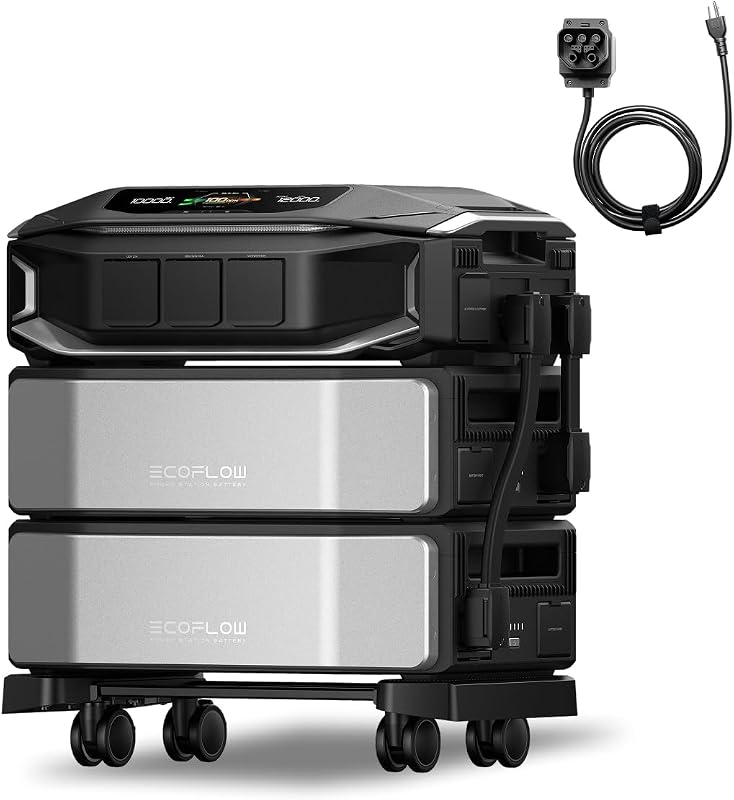
The EcoFlow DELTA Pro Ultra X is a heavy-duty energy storage system created to supply whole-home electricity during sudden outages and grid disruptions. Consisting of a central power inverter and two modular battery packs, this solar-compatible powerhouse generates 12,000 watts of continuous output alongside 12,288 watt-hours of baseline battery reserves. Our verdict is that this unit provides an outstanding, whisper-quiet alternative to conventional combustion generators, offering homeowners reliable plug-and-play energy security capable of running high-demand household appliances without the fuss of gasoline, oil changes, or toxic exhaust fumes.
This backup system is an excellent match for suburban homeowners, families living in regions prone to severe seasonal storms, and individuals seeking seamless power protection for essential medical equipment or home offices. Because it relies on clean lithium iron phosphate battery cells, it can be safely stored indoors right where you need it most. However, apartment dwellers, casual tent campers, or those seeking lightweight, grab-and-go portable power packs will find this multi-unit hardware far too bulky. In this ecoflow ultra pro x review, we break down its real-world capabilities to help first-time buyers make a confident, well-informed emergency planning decision.
EcoFlow DELTA Pro Ultra X at a Glance
| Specification Attribute | Manufacturer Details |
|---|---|
| Running Wattage | 12,000 watts (scalable from 12 kW to 36 kW) |
| Starting Wattage | 12,000 watts |
| Baseline Storage Capacity | 12,288 Wh (1 inverter unit plus 2 extra batteries) |
| Expandable Storage Range | Scalable from 12 kWh up to 180 kWh |
| Battery Cell Chemistry | EV-grade Lithium Iron Phosphate (LiFePO4) |
| Outage Switchover Time | Under 20 milliseconds |
| Integrated Power Outlets | 3 total power outlets |
| Total System Weight | 350 pounds |
| Overall Hardware Dimensions | 26.6 inches long by 18.7 inches wide by 9.06 inches high |
| Operational Frequency | 60 hertz |
Power Output and Expandable Capacity
When diving into the ecoflow ultra pro x specs, the first figure that stands out is its 12,000-watt continuous running and starting capacity. For first-time shoppers, understanding wattage comes down to imagining how many appliances can run simultaneously. A standard 12,000-watt output can power energy-hungry machines like central air conditioners, water heaters, and electric vehicle chargers all at once without tripping circuit breakers. Homeowners exploring compact backup options like the delta 3 pro max often discover that stepping up to this system unlocks commercial-grade throughput scalable from 12 kW to 36 kW across multiple unified units.
Alongside sheer output wattage, the listing highlights the ecoflow ultra pro x expandable capacity. The package arrives configured with 12,288 watt-hours of energy storage split across the main inverter and two included extra batteries. Watt-hours represent how long your stored electricity will last over time; for instance, running a 100-watt full-sized refrigerator requires roughly 2,400 watt-hours over a 24-hour cycle. If you anticipate multi-day winter storms, the architecture allows you to scale storage from 12 kWh all the way up to an immense 180 kWh by adding plug-and-play expansion packs.
Managing this massive reservoir is simple because the system handles heavy electrical demands without demanding manual voltage balancing. While standard portable power packs struggle when inductive motors start up, this unit supplies a flat 12,000-watt baseline that prevents lights from flickering when major appliances kick on. This high output ensures that families do not have to pick and choose between keeping the kitchen refrigerator running, charging an electric commuter vehicle, or heating living spaces when winter grid connections fail.
Blackout Protection and Instant Switchover
Deploying the ecoflow ultra pro x for blackouts brings an essential advantage: speed. Traditional standby combustion generators often take anywhere from ten seconds to a couple of minutes to detect an outage, crank their engines, and transfer power. In contrast, this emergency station switches from municipal power to stored battery energy in under 20 milliseconds. That rapid transfer is literally faster than the blink of an eye, meaning desktop workstations, internet routers, continuous positive airway pressure machines, and home entertainment setups stay powered without rebooting or corrupting data.
Choosing the ecoflow delta pro ultra x for home backup also introduces intelligent energy savings into everyday domestic routines. Utilizing an integrated Current Sense Transformer, the hardware works nonstop to monitor household consumption and lower utility bills. It automatically directs surplus wattage generated by rooftop solar arrays into home circuits or electric vehicle charging rather than letting power go unused. For homeowners looking into advanced panel management systems such as the ecoflow smart panel 3, this intelligent load balancing makes shifting between solar inputs, stored battery power, and off-peak utility electricity entirely seamless.
Severe weather preparation is another critical strength engineered into the device’s operational software. The station includes automated storm prep functionality that monitors weather alerts and charges the connected batteries to full capacity before anticipated severe storms strike. During an extended grid failure, smart circuitry balances electrical loads and automatically recharges when alternative inputs become active. This proactive power management ensures that you never head into a severe storm front with depleted reserves, extending overall system runtime when local utility repair crews face prolonged delays.
Battery Safety and Long-Term Durability
A significant concern for anyone investing in home battery banks is cell longevity and fire safety. The ecoflow ultra pro x battery life benefits substantially from the inclusion of electric-vehicle-grade lithium iron phosphate chemistry, commonly referred to as LiFePO4. Unlike older lithium-ion formulas that run hot and degrade quickly, LiFePO4 cells remain remarkably cool under heavy discharge rates and resist thermal runaway. This chemical stability allows the battery cells to last through years of frequent cycling, making them a durable long-term investment for residential emergency preparedness.
Safety engineering goes well beyond the base cell chemistry. EcoFlow implements a dual battery management system that conducts over 100 real-time safety checks every single second. This three-level protective framework constantly monitors operating voltage, internal temperature, and electrical loads across all active connections. Much like the protective monitoring found on mid-sized units like the ecoflow delta 2 pro, this architecture isolates unexpected faults instantly, preventing localized electrical anomalies from interrupting power delivery to critical household circuits.
Indoor safety is where this clean storage platform completely outclasses fossil-fuel alternatives. Gasoline and propane engines produce lethal carbon monoxide, noxious exhaust fumes, and deafening engine noise, forcing users to operate them outdoors in rain or snow behind long, tangled extension cords. This battery-driven setup operates in complete silence without emitting odors or pollutants. Homeowners can install the hardware safely in a utility closet, garage, or laundry room, keeping their family protected without exposing expensive gear to severe weather outdoors.
Solar Generation, Installation, and Portability
When paired with outdoor photovoltaic arrays, this hardware functions as a clean ecoflow delta pro ultra x solar generator. The unit uses solar energy as a primary power source and works seamlessly with clean energy inputs to replenish its massive internal reserve. EcoFlow designed the charging architecture so that surplus solar power generated during peak midday sunlight is routed directly into home appliances or personal vehicles. This setup provides true off-grid capability, allowing households to maintain continuous electrical autonomy indefinitely even during extended regional grid failures.
A major advantage for first-time buyers is how straightforward the ecoflow delta pro ultra x setup proves to be. While traditional standby backup solutions require intrusive trenching, permanent structural modifications, and expensive professional electrical hardwiring, this modular system can be assembled without specialized tools or professional electricians. The extra batteries connect through simple plug-and-play terminals, and ground-mount solar panels can be installed easily on your property and repositioned seasonally to track sunlight angles for optimal clean energy harvesting throughout the year.
Portability is relative with an emergency system of this caliber. Weighing in at a total of 350 pounds, the equipment is undeniably heavy, but its modular architecture means it can be disassembled into individual inverter and battery modules. The manufacturer dispatches the inverter and the extra battery packs in separate shipping packages to keep transport manageable. Because the hardware does not require irreversible hardwiring into your foundation, you have the freedom to unplug the entire station and move it along with your belongings if you relocate to a new home.
EcoFlow DELTA Pro Ultra X Pros and Cons
Two swatches, side by side. Everything on both sides is read from the product listing and from buyer feedback – nothing here comes from handling the product.
What works
- 12,000-watt continuous power running high-demand household appliances
- 12,288Wh baseline capacity expandable up to 180kWh
- Sub-20 millisecond automatic transfer time during blackouts
- EV-grade LiFePO4 cells with dual battery management system
- Plug-and-play modular expansion requiring no hardwiring
What to check
- Hefty 350-pound total weight limits single-person transport
- Ships in multiple separate freight packages
- Only three integrated power outlets on the unit
Who Should Buy the EcoFlow DELTA Pro Ultra X
Choosing the right backup power hardware requires balancing your household energy demands with your budget, available storage space, and physical strength.
Buy It If
- You want whole-home emergency power capable of running central air conditioning, refrigerators, and electric vehicles without fossil fuel.
- You require instant blackout switchover under 20 milliseconds to keep sensitive electronics and medical devices running continuously.
- You prefer an indoor-safe, whisper-quiet alternative to loud, fume-emitting combustion generators that require constant engine maintenance.
- You plan to expand your home energy storage over time, scaling easily from 12 kWh up to 180 kWh using tool-free battery modules.
Skip It If
- You live in an apartment or compact residence where storing a 350-pound multi-piece battery setup is physically impractical.
- You only need a lightweight, portable power station to run basic camping lights, smartphones, or small laptops during weekend trips.
- You are looking for an ultra-simple single-box unit that features a dozen built-in AC outlets without relying on external distribution panels.
Final Verdict
Concluding our ecoflow ultra pro x review, this sophisticated emergency power hub represents a massive leap forward in residential energy resilience. By uniting a 12,000-watt continuous output inverter with 12,288 watt-hours of modular LiFePO4 battery capacity, it eliminates the traditional trade-offs between clean battery convenience and high-demand household performance. Its sub-20-millisecond automatic switchover speed, coupled with dual battery management monitoring and smart storm prep automation, delivers peace of mind that rivals costly whole-home standby generators without generating toxic exhaust fumes or ear-splitting mechanical roar.
So, is ecoflow ultra pro x worth it for the typical homeowner? If your goal is safeguarding your family against severe weather outages while optimizing daily solar utility consumption, this expandable generator delivers exceptional real-world utility. While the 350-pound total hardware weight requires deliberate space planning and careful unboxing, the tool-free setup and modular portability offer unmatched flexibility. For households wanting uncompromising power protection, dependable battery longevity, and complete independence from erratic electrical utility grids, this clean energy station stands out as an outstanding home investment.
FAQ
How fast does the emergency power station turn on during an unexpected blackout?
The system switches over in under 20 milliseconds when municipal grid power fails. This near-instantaneous transfer speed is faster than a human blink, ensuring uninterrupted operation for sensitive electronics like desktop computers, network routers, and essential home medical equipment.
Can I expand the storage capacity if my household energy needs increase later?
Yes, the modular platform is engineered for scalable expansion. Starting from the included 12,288 watt-hour baseline, homeowners can add plug-and-play extra batteries over time to reach up to 180 kilowatt-hours of total storage without needing tools or professional electricians.
Does the system require permanent electrical hardwiring into my home?
No, the system is designed to provide power freedom without mandatory hardwiring. You can connect it directly to household appliances or plug-and-play battery expansions, giving you the flexibility to unplug the entire station and take it with you if you move.
How does the unit arrive, and why does it weigh 350 pounds?
Because the total system weighs 350 pounds, the manufacturer dispatches the inverter and the two extra battery units in separate packaging. This divided shipping approach protects the hardware during transit and allows you to move and assemble each piece individually upon arrival.
What makes EV-grade LiFePO4 battery cells safer than standard lithium batteries?
Lithium Iron Phosphate cells offer superior thermal and chemical stability compared to standard lithium-ion formulas. They operate at cooler internal temperatures, eliminate runaway fire risks under heavy loads, and provide significantly longer life cycles for dependable multi-year emergency preparedness.
Prices and specifications above are read from the product page and can change without notice. Scores are out of 10, based on listed specifications and buyer feedback; nothing on this page comes from handling the product.