As Amazon Associates, we earn from qualifying purchases. This means we may receive a small commission at no extra cost to you if you click through and make a purchase.
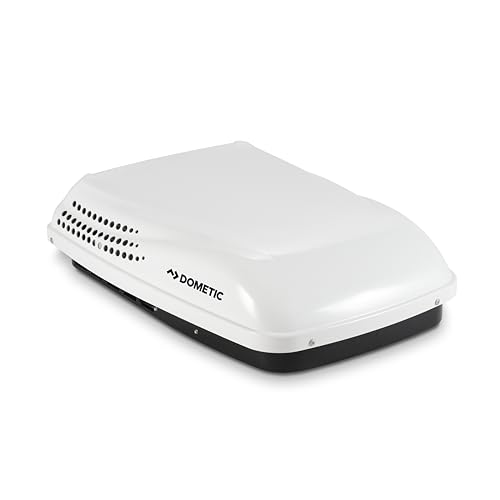
The Dometic Penguin II is a dedicated low-profile packaged rooftop cooling unit engineered specifically to withstand the rigors of travel trailer and motorhome living. For first-time recreational vehicle owners, navigating rooftop climate gear can feel daunting, but having a dependable machine overhead makes all the difference when midsummer temperatures soar. Delivering 13,500 British Thermal Units of rated cooling capacity, this sleek rooftop machine provides steady interior climate control while minimizing wind resistance on open highways. As a streamlined cooling solution from one of the most recognized names in mobile living, it earns our recommendation for travelers seeking aerodynamic styling, durable construction, and flexible air distribution.
This dometic penguin air conditioner is ideally suited for campers, weekend road-trippers, and full-time RV enthusiasts who prioritize overhead bridge clearance, highway fuel efficiency, and adaptable ducted or non-ducted ceiling configurations. It serves as a practical upgrade for standard recreational vehicle roof openings where low exterior height is essential. Conversely, shoppers looking for an all-in-one out-of-the-box system with integrated control panels on the shroud, built-in electric heat, or a plug-and-play setup without purchasing separate hardware should look elsewhere, as this cool-only machine requires external control components to operate.
Dometic Penguin II at a Glance

| Product Feature | Specification Details |
|---|---|
| Nominal Cooling Capacity | 13,500 British Thermal Units (13.5K BTU) |
| Exterior Profile Dimensions | 42.5 inches Deep x 29.75 inches Wide x 12.75 inches High |
| Total Unit Weight | 99 pounds |
| Operating Voltage | 115 Volts |
| Total Wattage | 3,956 Watts |
| Compressor Design | Rotary scroll |
| Eco-Friendly Refrigerant | R-410A |
| Acoustic Sound Level | 1 sone |
| Air Distribution Setup | Ducted and Non-Ducted configurations |
| Control Compatibility | Requires CCC2 or CT thermostat (no pre-installed controls) |
Cooling Performance and Cabin Airflow
The primary duty of any rooftop recreational vehicle system is turning a baking mobile enclosure into a refreshing refuge, and this 13500 btu rv air conditioner delivers substantial thermal relief. Operating with 13,500 BTUs of cooling power, the appliance is calibrated to manage the ambient heat gain common in mid-sized travel trailers, fifth wheels, and camper vans. Sunlight beating down on an RV roof creates enormous radiant heat transfer, demanding an aggressive cooling system capable of continuous operation. The internal rotary scroll compressor circulates R-410A refrigerant to extract heat and moisture from the living area rapidly, creating a crisp interior atmosphere after a long day in the sun.
Unlike residential cooling appliances or an lg dual inverter window air conditioner that adjust motor output across variable speeds, this packaged rooftop machine relies on a heavy-duty single-speed rotary scroll motor designed specifically for mobile use. The compressor works alongside a high-performance motor and engineered fan assembly to push cooled air through the cabin interior. This continuous fan and compressor pairing ensures rapid heat dissipation even when outdoor temperatures climb into oppressive ranges, making it an effective choice for summer camping trips across desert and coastal climates.
In addition to raw cooling power, the internal architecture utilizes an expanded polypropylene (EPP) foam housing surrounding the mechanical core. This foam enclosure serves a dual purpose: it insulates the cold evaporator coil from the hot exterior ambient air and creates a smooth internal aerodynamic passage for incoming and outgoing airflow. By preventing thermal transfer across the housing, the unit maximizes the chilled air delivered through your vents rather than losing thermal energy through an uninsulated plastic shroud.
Low-Profile Aerodynamics and Exterior Housing
Roof clearance is one of the most critical concerns for any recreational vehicle owner, especially when navigating under low-hanging tree branches, toll booths, and fuel station canopies. Measuring just 12.75 inches from the mounting base to the highest point of the outer shroud, this low profile rv air conditioner sits significantly lower than traditional bubble-shaped rooftop coolers. Its sweeping, contoured outer shell is shaped to channel headwind smoothly over the top and around the sides of the RV during travel, reducing aerodynamic drag and protecting the unit from wind damage at highway speeds.
Structural longevity on the highway requires robust materials capable of withstanding constant movement, road shock, and fluctuating weather. The unit features a rib-reinforced base pan that provides a rigid foundation across the roof cut-out. This reinforced floor absorbs chassis flex and vibration as your trailer or coach navigates bumpy backroads, preventing cracks and stress fatigue that could otherwise lead to structural failure or water leaks around the roof seal. The Polar White exterior finish reflects intense solar radiation, helping lower surface temperatures before ambient heat reaches the interior components.
Weight management is another vital engineering consideration for travel trailers and motorhomes where roof load ratings are tightly restricted. By utilizing the lightweight EPP foam housing inside the structural frame, the overall weight of the appliance is held to 99 pounds. Keeping the unit under one hundred pounds makes positioning and alignment during installation more manageable for two people, while avoiding unnecessary top-heavy weight distribution that could compromise vehicle handling and sway characteristics on the highway.
Ducted Versus Non-Ducted Setup Options
Flexibility during installation is a notable strength of this machine, allowing owners to match the hardware to their specific floor plan. When reviewing the dometic penguin ii ducted vs non ducted configuration options, first-time owners should know that this single packaged unit can serve either layout. In a ducted arrangement, the air conditioner connects directly into an internal ceiling duct network built into the camper roof, distributing conditioned air evenly through multiple ceiling vents into bedrooms, living areas, and bathrooms for balanced temperature control.
For RVs, converted vans, or older campers without pre-existing ceiling ductwork, the unit operates seamlessly as a non-ducted system. In this application, the unit pairs with an interior ceiling air distribution box mounted directly below the roof opening. The air distribution box dumps cooled air straight down into the primary living zone, utilizing directional louvers to sweep chilled air across the room. This makes the machine an adaptable replacement whether your camper has built-in ductwork or relies on a direct-drop ceiling grille.
A crucial factor for prospective buyers to understand before purchasing is the equipment requirement for operation. The manufacturer supplies this model as a cool-only rooftop unit without pre-installed controls. There are no knobs, buttons, or digital screens mounted on the rooftop shroud or internal mechanical frame. To achieve a complete, operational setup, shoppers must acquire a compatible interior air distribution kit along with either a Dometic Comfort Control Center II (CCC2) or Cool Touch (CT) thermostat, configured for single-zone or multi-zone operation depending on your rig’s layout.
Electrical Demands and Power System Planning
Understanding electrical specifications is essential for any first-time camper owner to avoid tripping circuit breakers or damaging compressor motors at the campground pedestal. This rooftop unit operates on standard 115-volt corded electric power, making it fully compatible with North American RV park hookups. The product listing specifies a total wattage of 3,956 watts, which accounts for the substantial initial surge draw required to start the heavy-duty rotary scroll compressor alongside the high-performance fan motor under heavy thermal loads.
Campers accustomed to compact personal cooling devices like the pure chill air conditioner must recognize that a true 13,500 BTU compressor-based machine has vastly higher energy requirements. Running this rooftop unit requires a reliable 30-amp or 50-amp shore power connection, or an appropriately sized recreational vehicle generator capable of supplying the initial startup surge without voltage drops. Low voltage can damage rotary scroll compressors over time, making adequate electrical infrastructure essential whenever you plan to camp away from utility connections.
While compact desktop gadgets such as the coldeez cooling ace air conditioner function on small internal batteries or basic USB plugs for localized spot relief, maintaining whole-cabin comfort requires the full 115-volt infrastructure of an RV power panel. Ensuring your coach has properly sized wiring, intact circuit breakers, and clean power delivery will protect the internal components and guarantee consistent cooling on hot travel days.
Acoustic Output and Travel Comfort
Operating sound levels inside the confined quarters of an RV cabin directly influence your daytime relaxation and nighttime sleep quality. The official product specifications list an acoustic rating of 1 sone for this model, indicating an exceptionally quiet baseline sound rating for its mechanical class. In practical acoustic terms, one sone translates to a soft, unobtrusive hum that allows cabin occupants to watch television, carry on normal conversations, or fall asleep without harsh mechanical clatter dominating the space.
A large contributor to this smooth acoustic experience is the rotary scroll compressor design, which produces fewer abrupt mechanical pulses and harsh thumps than older reciprocating piston compressors during startup and shutdown cycles. The internal EPP foam casing further dampens motor vibrations, absorbing mechanical hums before they can resonate through the structural roof framing of your travel trailer. Combined with a precision-balanced fan assembly, the unit maintains smooth, steady airflow that acts like gentle white noise inside the living quarters.
Rooftop acoustic performance also depends on your installation layout. Ducted installations typically yield the quietest interior experience, as the air distribution box is enclosed and air travels through insulated roof channels before reaching your living space. Non-ducted configurations will produce more noticeable airflow rush directly underneath the ceiling opening, but the steady mechanical operation of the motor and fan avoids the jarring rattles often associated with budget-oriented mobile cooling appliances.
Dometic Penguin II Pros and Cons
Two swatches, side by side. Everything on both sides is read from the product listing and from buyer feedback – nothing here comes from handling the product.
What works
- Low 12.75-inch profile reduces wind resistance
- Lightweight EPP foam housing enhances cooling
- Durable rib-reinforced base pan withstands road vibration
- Flexible setup works in ducted or non-ducted RVs
- Eco-friendly R-410A refrigerant with rotary scroll compressor
What to check
- Requires separate thermostat and ceiling kit purchase
- Provides cooling only without built-in heat strips
- High initial startup wattage requires robust power source
Who Should Buy the Dometic Penguin II
Buy It If
- You need a low-profile rooftop unit under 13 inches tall to clear low garage doors, bridges, and tree branches.
- Your recreational vehicle supports 115-volt power systems and standard 13,500 BTU cooling capacities.
- You want the versatility to install the appliance on either a ducted ceiling network or a non-ducted drop grille.
- You are building a custom multi-zone climate system using Dometic CCC2 or CT digital wall thermostats.
Skip It If
- You want a complete out-of-the-box kit with built-in control dials and ceiling grilles included in a single package.
- You require a rooftop heat pump or integrated electric heat strip directly out of the box for winter use.
- Your electrical system cannot supply the startup wattage required by a full-sized 115-volt rotary scroll compressor.
Final Verdict
When asking whether the dometic penguin ii rv air conditioner represents a sound investment for first-time buyers, the answer lies in its proven build quality, low wind profile, and reliable cooling efficiency. Engineered specifically for travel conditions, the combination of an aerodynamic 12.75-inch height, an EPP foam insulated core, and a rib-reinforced base pan ensures this appliance withstands thousands of highway miles while keeping the cabin interior consistently chilled. The 13,500 BTU output provides ample thermal capacity to handle intense summer heat across a wide range of motorhome and travel trailer layouts.
Before purchasing, buyers must account for the additional hardware required to complete the installation. Because this is a cool-only rooftop component lacking pre-installed controls, you must budget for a compatible ceiling assembly and a CCC2 or CT wall thermostat. Once properly paired with the right interior components and supplied with steady 115-volt power, this durable, aerodynamic cooling unit delivers dependable comfort and seamless highway performance for many camping seasons ahead.
FAQ
Is the Dometic Penguin II worth it for first-time RV owners?
For buyers who value exterior clearance and reduced highway drag, the Dometic Penguin II is an excellent investment. Its low 12.75-inch profile prevents clearance headaches under low bridges and trees, while its durable rib-reinforced base pan and EPP foam insulation provide lasting protection against road vibration and harsh weather conditions.
Does the Dometic Penguin II include pre-installed controls or a ceiling assembly?
No, the unit arrives strictly as a cool-only rooftop appliance without pre-installed controls or an interior ceiling assembly. To complete the dometic penguin rooftop ac installation, you must purchase a compatible interior air distribution box or ceiling kit and a Dometic CCC2 or CT single-zone or multi-zone thermostat separately.
Can this unit be installed in both ducted and non-ducted RV setups?
Yes, this model is engineered for complete versatility across both ducted and non-ducted configurations. It can connect directly to an existing in-ceiling duct system to supply multiple vents, or it can be paired with an open-plenum ceiling assembly that discharges cold air directly into the room below.
What are the primary electrical requirements to run this rooftop air conditioner?
The unit operates on standard 115-volt corded electric power and draws up to 3,956 watts during startup and demanding cooling cycles. Reliable operation requires connection to a standard 30-amp or 50-amp RV campground pedestal, or an onboard generator capable of handling the initial compressor starting surge.
What is the penguin air conditioner noise level during regular operation?
The unit features a noise specification of 1 sone, providing quiet, unobtrusive operation inside the living space. Its rotary scroll compressor and EPP foam internal housing help absorb mechanical vibrations, resulting in steady, gentle airflow rather than harsh metallic rattling.
Prices and specifications above are read from the product page and can change without notice. Scores are out of 10, based on listed specifications and buyer feedback; nothing on this page comes from handling the product.


