As Amazon Associates, we earn from qualifying purchases. This means we may receive a small commission at no extra cost to you if you click through and make a purchase.
As an Amazon Associate we earn from qualifying purchases. Links on this page are affiliate links.
When you compare optoma vs formovie projector options, you face two very different approaches to big-screen viewing. Both brands offer short-throw designs that place the device close to the wall. The main difference lies in their technology and target audience. Optoma focuses on high brightness and low latency for gaming. Formovie prioritizes cinematic quality with laser light sources and smart features. This guide breaks down the specs to help you decide.
Native Resolution
1080p Full HD
4K UHD
Light Source
Lamp
Triple Laser
Brightness
3,800 Lumens
1,800 ISO Lumens
HDR Support
4K HDR Compatible
Dolby Vision, HDR10+
Smart Platform
Not listed
Android TV 11.0
Audio
10W speaker
Dolby Atmos, Dual 15W speakers
Choose the first if
- You need high brightness for rooms with significant ambient light.
- You prioritize low input lag for competitive gaming.
- You want a compact unit with a traditional lamp light source.
Choose the second if
- You want true 4K resolution for movies and TV shows.
- You prefer a built-in smart TV experience with Android TV.
- You value advanced HDR formats like Dolby Vision and laser color accuracy.
Verdict
Choose the Optoma if your priority is gaming performance and brightness in well-lit spaces. Select the Formovie if you want a cinematic experience with 4K resolution, smart features, and superior color gamut. Both serve distinct needs within the short-throw category.
Optoma vs Formovie Spec Comparison
Native resolution
Edge: Formovie Theater 4K UST Laser Projector
The Formovie Theater delivers a native 4K UHD resolution, providing four times the pixel count of standard 1080p displays. This results in significantly sharper text and finer image details for movies and high-definition content. In contrast, the Optoma GT1080HDR is limited to a native 1080p Full HD resolution. While it supports 4K HDR input signals, the projector itself does not upscale or display a true 4K image. For viewers who prioritize absolute pixel density and clarity, the Formovie’s native 4K panel offers a distinct advantage over the Optoma’s 1080p base.
Light source technology
Edge: Formovie Theater 4K UST Laser Projector
Formovie uses a triple laser light source with ALPD4.0 technology, which typically offers longer lifespan and more consistent color performance over time. It covers over 107% of the Rec.2020 color gamut, ensuring highly accurate and vibrant colors. Optoma relies on a traditional lamp-based light source. While the Optoma lamp offers up to 15,000 hours of life in Eco+ mode, lamps generally degrade faster than lasers and may require eventual replacement. The laser technology in the Formovie provides superior color volume and stability compared to the lamp in the Optoma.
Brightness output
Edge: Optoma 1080p Short Throw Gaming Projector
The Optoma GT1080HDR boasts a high brightness rating of 3,800 lumens, making it well-suited for environments with significant ambient light. This high output helps maintain image visibility during daytime viewing or in rooms where you cannot fully control the lighting. The Formovie Theater provides 1,800 ISO lumens. While this is sufficient for many home theater setups, it is substantially lower than the Optoma’s output. If you frequently watch with lights on or in bright rooms, the Optoma’s higher lumen count gives it a clear edge in visibility.
Smart platform
Edge: Formovie Theater 4K UST Laser Projector
The Formovie Theater runs on Android TV 11.0, providing a built-in smart operating system with access to the Google Play Store. This allows you to install over 5,000 apps, including major streaming services like Disney+, HBO, Hulu, and YouTube, directly on the projector. The Optoma GT1080HDR does not list a built-in smart platform in its specifications. You must connect an external streaming device, such as a Roku or Fire Stick, to access online content. The Formovie offers a more integrated and convenient entertainment experience without needing extra hardware.
HDR support
Edge: Formovie Theater 4K UST Laser Projector
Formovie supports Dolby Vision and HDR10+, delivering high dynamic range with a 3000:1 contrast ratio for deeper blacks and brighter highlights. This ensures a more cinematic picture with better detail in dark and bright scenes. The Optoma GT1080HDR is compatible with 4K HDR input, meaning it can accept HDR signals, but it does not specify support for advanced formats like Dolby Vision or HDR10+. It processes the signal but may not fully utilize the dynamic range capabilities of these formats. The Formovie’s dedicated HDR processing offers a more advanced visual experience.
Audio system
Edge: Formovie Theater 4K UST Laser Projector
The Formovie Theater features dual 15W full-range speakers tuned by Bowers & Wilkins engineers, supporting Dolby Atmos for spatial sound. This provides a rich, immersive audio experience that complements the visual quality. The Optoma GT1080HDR includes a built-in 10W speaker, which is adequate for basic dialogue and simple sound effects but lacks the power and fidelity of the Formovie’s system. For viewers who prefer built-in audio without external speakers, the Formovie’s Bowers & Wilkins tuned setup is superior.
Input lag for gaming
Edge: Optoma 1080p Short Throw Gaming Projector
The Optoma GT1080HDR is specifically designed for gaming, featuring ultra-low input lag for fast, responsive gameplay. This makes it ideal for competitive console and PC gaming where reaction time matters. The Formovie Theater does not list specific input lag values in its provided specifications. While it supports gaming, the lack of published low-lag metrics makes it harder to verify its suitability for competitive play compared to the Optoma. For gamers who prioritize speed and responsiveness, the Optoma’s dedicated low-lag design is the stronger choice.
Choose Your Projector Based on Needs
Gamers needing low lag and high brightness
Our pick: Optoma 1080p Short Throw Gaming Projector
The Optoma GT1080HDR features ultra-low input lag for responsive gameplay. Its 3,800 lumen brightness ensures clear images even with ambient light. The 1080p resolution and short throw design fit gaming rooms well. You get a reliable lamp life of 15,000 hours for long-term use without frequent replacements.
Home theater fans wanting 4K and HDR
Our pick: Formovie Theater 4K UST Laser Projector
The Formovie Theater offers native 4K UHD resolution with Dolby Vision and HDR10+ support. This triple laser projector delivers 1800 ISO lumens and 107% of the Rec.2020 color gamut. You receive superior color accuracy and contrast. The ultra short throw design places it close to the screen for a cinematic experience.
Users wanting built-in smart TV features
Our pick: Formovie Theater 4K UST Laser Projector
The Formovie Theater includes Android TV 11.0 with access to over 5,000 apps. You can stream content directly without external devices. It also features Dolby Atmos audio with dual 15W speakers tuned by Bowers & Wilkins. This all-in-one solution simplifies setup and enhances both visual and auditory entertainment.
Buyers on a tighter budget seeking value
Our pick: Optoma 1080p Short Throw Gaming Projector
The Optoma GT1080HDR provides essential features at a lower entry point. It includes dual HDMI inputs, USB power, and a built-in 10W speaker. The 1080p resolution is sufficient for many users. You get a compact unit weighing 6.61 pounds, making it easier to move or store compared to heavier laser models.

Optoma 1080p Short Throw Gaming Projector
Best for: Low-lag gaming in compact, bright rooms
- Brightness
- 3,800 Lumens
- Native Resolution
- 1080p Full HD
- Light Source
- Lamp
- Throw Type
- Short Throw
- Intended Use
- Gaming
- Dimensions
- 12.4 × 9.5 × 4.5 inches
The Optoma Short Throw 1080p Projector delivers a 100-inch image from just over three feet away. With 3,800 lumens of brightness, it handles rooms with ambient light while maintaining visibility. It features native 1080p resolution with 4K HDR input support, low input lag, and a traditional lamp light source. This setup suits you if you need a responsive display for gaming or golf simulation.
- 3,800 lumens brightness for rooms with ambient light
- Short throw lens projects 100 inches from just over 3 feet
- Low input lag profile tailored for gaming
- Up to 15,000 hours of lamp life in Eco+ mode
- Native resolution is limited to 1080p Full HD
- Uses a replaceable lamp rather than a laser engine
- You want a large 100-inch image from just over 3 feet away.
- You need low latency for responsive console or PC gaming.
- You use your projector in spaces with ambient daylight.
- You require native 4K display resolution.
- You prefer maintenance-free laser illumination over lamp bulbs.
Verdict: Optoma Short Throw 1080p Projector serves gamers and golf simulator setups requiring high brightness and short placement distances. It delivers fast response times and 1080p clarity without demanding long room dimensions.

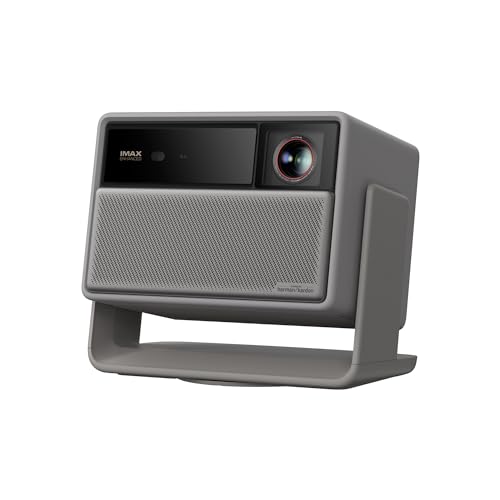
Formovie Theater 4K UST Laser Projector
Best for: 4K home theater with built-in audio
- Brightness
- 1800 ISO Lumens
- Native Resolution
- 4K UHD
- Light Source
- Triple Laser
- Throw Type
- Ultra Short Throw
- Smart Platform
- Android TV 11.0
- HDR Format
- Dolby Vision, HDR10+
The Formovie Theater is an ultra-short-throw projector with 4K UHD resolution and triple laser illumination. It delivers 1800 ISO lumens of brightness and supports Dolby Vision HDR. The unit includes built-in Bowers & Wilkins speakers tuned for spatial audio. It runs on Android TV 11.0 for direct app access. This projector suits viewers who want high color accuracy and a compact footprint in a living room setting.
- 4K UHD native resolution with triple laser light source
- 1800 ISO lumens brightness for clear images in ambient light
- Dolby Vision and HDR10+ support for high dynamic range
- Built-in Bowers & Wilkins speakers with Dolby Atmos
- 1800 ISO lumens is lower than the Optoma GT1080HDR's 3,800 lumens
- 16.5 pound weight is heavier than typical portable projectors
- You want 4K resolution and HDR support in a compact form
- You prefer an ultra-short-throw setup to save space
- You want built-in high-quality speakers without extra gear
- You need maximum brightness for a very bright room
- You require a lighter device for frequent moving
- You prefer Full HD resolution over 4K
Verdict: The Formovie Theater 4K Laser UST Projector fits you if you prioritize 4K detail and integrated audio over raw brightness. It is a solid choice for dedicated home theater spaces where ambient light is controlled.
Specifications side by side
| Spec | Optoma 1080p Short Throw Gaming Projector | Formovie Theater 4K UST Laser Projector |
|---|---|---|
| Brightness | 3,800 Lumens | 1800 ISO Lumens |
| Native Resolution | 1080p Full HD | 4K UHD |
| Light Source | Lamp | Triple Laser |
| Throw Type | Short Throw | Ultra Short Throw |
| Smart Platform | – | Android TV 11.0 |
| HDR Format | – | Dolby Vision, HDR10+ |
| Resolution | 1080p Full HD | 4K UHD |
| Intended Use | Gaming | – |
| Throw Ratio | Short Throw | Ultra Short Throw |
| Use | Golf Simulation | – |
| Dimensions | 12.4 × 9.5 × 4.5 inches | 22 × 14 × 5 inches |
| Weight | 6.61 pounds | 16.5 pounds |
| Color | White | Cosmos Grey |
| Model | GT1080HDR | FORMOVIE-THEATER |
Frequently asked questions
Which projector is better for gaming?
The Optoma GT1080HDR is the better choice for gaming. It is designed for low-lag performance and high brightness, making it suitable for fast-paced titles. Its 1080p resolution and short throw ratio allow for a large image in compact spaces. This makes it ideal for gaming rooms or golf simulators where quick response times matter most.
Which projector offers better image quality for movies?
The Formovie Theater provides superior image quality for movies. It features a native 4K UHD resolution, which offers four times the pixel count of 1080p displays. This results in sharper text and finer details. It also supports Dolby Vision HDR, enhancing contrast and color depth for a more immersive cinematic experience in controlled lighting environments.
Do both projectors use short throw lenses?
Yes, both models utilize short-throw technology. The Optoma GT1080HDR uses a short throw ratio, allowing it to project a large image from a close distance. The Formovie Theater employs an ultra-short throw design, placing it even closer to the wall or screen. This minimizes shadows and simplifies placement in living rooms or dedicated theaters.
How do the physical sizes compare?
The Optoma projector is significantly more compact and lightweight. It measures 12.4 inches in length and weighs 6.61 pounds. The Formovie Theater is larger and heavier, measuring 22 inches in length and weighing 16.5 pounds. The Formovie also includes integrated audio, which contributes to its greater size and weight compared to the Optoma model.
Which projector is suitable for golf simulators?
The Optoma GT1080HDR is specifically noted for golf simulator setups. Its high brightness and fast response times handle the rapid motion of virtual golf games. The 1080p resolution ensures clear ball tracking. Its short throw design fits well in smaller simulator rooms, providing a large screen without requiring extensive room depth.
What light source does the Formovie use?
The Formovie Theater uses a laser light source. This technology typically offers consistent brightness over time and a longer lifespan compared to traditional lamps. It pairs with a 4K UHD resolution and Dolby Vision support to deliver high-quality visuals. This makes it a strong option for dedicated home theater spaces where ambient light is managed.
See also
Prices and specifications above are read from the product page and can change without notice. Scores are out of 10, based on listed specifications and buyer feedback; nothing on this page comes from handling the product.