As Amazon Associates, we earn from qualifying purchases. This means we may receive a small commission at no extra cost to you if you click through and make a purchase.
As an Amazon Associate we earn from qualifying purchases. Links on this page are affiliate links.
Evaluating the hisense 120l9g cine120a 4k UHD laser TV vs pt1 ultra short throw highlights two triple-laser 4K projectors built for home entertainment. Both models provide ultra short throw projection and Dolby Atmos support. The primary difference lies in their hardware setup and display capabilities. The 120L9G delivers 3000 lumens alongside a bundled 120-inch ALR screen, while the PT1 features Dolby Vision, Google TV, and variable image sizes up to 150 inches.
Brightness
3000 Lumens
2500 ANSI Lumens
HDR format
HDR10
Dolby Vision
Smart platform
Android TV
Google TV
Screen size
120 inches (ALR screen included)
80 to 150 inches (screen not included)
Speaker output
40W Dolby Atmos
Dolby Atmos (wattage not listed)
Choose the first if
- You want a complete setup that includes a dedicated 120-inch ALR screen.
- You need higher brightness with 3000 lumens for rooms with ambient light.
- You prefer built-in 40W sound without needing separate audio equipment.
Choose the second if
- You want Dolby Vision support and a built-in 4K AI upscaler.
- You prefer Google TV for content streaming and app navigation.
- You need flexible projection sizes between 80 and 150 inches.
Verdict
The Hisense 120L9G-CINE120A suits you best if you want an all-in-one package with higher brightness and an included 120-inch ALR screen. The Hisense PT1 is the better option if you need Dolby Vision support and variable image sizing up to 150 inches. Your choice comes down to whether you prefer an included fixed screen or dynamic HDR formatting.
Hisense 120L9G vs Hisense PT1 Comparison
Brightness and Light Source
Edge: Hisense 120-Inch Triple-Laser UST Projector
You get a triple-laser light source with both models. The Hisense 120L9G delivers 3000 lumens of brightness using pure red, green, and blue lasers. It covers 107% of the BT.2020 color space. The Hisense PT1 produces 2500 ANSI lumens using its triple-laser Pro Laser Engine. Higher light output helps preserve image saturation when you project in spaces with ambient light. The 500-lumen advantage on the 120L9G ensures brighter highlights across large surfaces. While the PT1 provides ample illumination for dim settings, the 120L9G gives you more optical power to combat daylight and household lamps.
HDR Format Support
Edge: Hisense Triple Laser 4K Ultra Short Throw Projector
High dynamic range processing determines how each projector maps contrast and color detail. The Hisense 120L9G supports standard HDR10 formatting to display high dynamic range video. In contrast, the Hisense PT1 supports Dolby Vision alongside HDR standards. Dolby Vision provides dynamic metadata that adjusts picture parameters scene by scene or frame by frame. This real-time optimization delivers refined shadow details and balanced highlights compared to static HDR profiles. If you watch streaming titles mastered in Dolby Vision, the PT1 interprets that visual data natively. The 120L9G remains limited to the static metadata found in baseline HDR10 signals.
Screen Size and Versatility
Edge: Hisense Triple Laser 4K Ultra Short Throw Projector
Display sizing separates how you can set up each unit. The Hisense 120L9G comes paired with a dedicated 120-inch Ambient Light Rejecting screen. This fixed configuration matches the projector optics to that exact 120-inch diagonal surface. The Hisense PT1 offers a flexible projection diagonal ranging from 80 inches up to 150 inches. You can tailor the PT1 image to fit different wall spaces or varied screen dimensions in your room. If you want the freedom to adjust image size between 80 and 150 inches, the PT1 provides that range. The 120L9G restricts your setup to a single 120-inch format.
Smart TV Platform
Edge: Hisense Triple Laser 4K Ultra Short Throw Projector
Your navigation experience depends on the preloaded operating software. The Hisense 120L9G runs on Android TV. This platform gives you access to familiar media apps and basic smart capabilities. The Hisense PT1 upgrades to the newer Google TV interface. Google TV organizes movies and shows across your separate subscription apps onto a single home interface. It provides personalized profiles for individual viewers, curated content recommendations, and access to over 10,000 apps. You spend less time opening separate applications to locate your media on Google TV. The PT1 delivers a more consolidated streaming hub than the older Android TV setup on the 120L9G.
Integrated Audio System
Edge: Hisense 120-Inch Triple-Laser UST Projector
Sound hardware differs in power output between these two projectors. Both models feature built-in Dolby Atmos decoding for spatial audio processing. The Hisense 120L9G includes an integrated 40-watt sound system designed to deliver clear dialogue, distinct treble, and low-end response without external hardware. The Hisense PT1 lists Dolby Atmos functionality, but the manufacturer does not publish its internal speaker wattage or driver configuration. Knowing the 40-watt rating on the 120L9G confirms you receive substantial onboard audio power straight from the chassis. The PT1 leaves driver output unstated, giving the 120L9G the verified advantage for standalone audio delivery.
Chassis Size and Footprint
Edge: Hisense Triple Laser 4K Ultra Short Throw Projector
Console dimensions dictate where you can place the projector on your media furniture. The Hisense 120L9G measures 35 inches long, 21 inches wide, and 6 inches high. This wide casing requires a deep, dedicated entertainment credenza to support its chassis. The Hisense PT1 features a more compact design measuring 20.5 inches long, 11.1 inches wide, and 4.7 inches high, with a weight of 15.9 pounds. You can position the PT1 on standard tables and narrower stands much more easily. For setups where furniture depth and surface space are limited, the PT1 takes up substantially less room than the 120L9G.
Choosing Your Ideal Hisense Laser Projector
Viewers wanting a complete fixed-size setup with high output
Our pick: Hisense 120-Inch Triple-Laser UST Projector
You get a dedicated 120-inch ALR screen packaged directly with the projector. Its 3000 lumens provide strong visibility, while integrated 40W Dolby Atmos audio delivers sound directly without extra hardware. Built-in MEMC motion processing keeps fast sequences clear, and Android TV handles streaming playback for your entertainment space.
Viewers seeking adjustable projection sizes and Dolby Vision
Our pick: Hisense Triple Laser 4K Ultra Short Throw Projector
You can scale the image anywhere from 80 inches up to 150 inches to fit your wall space. It supports Dolby Vision dynamic HDR for enhanced scene-by-scene picture depth. The Google TV platform organizes your streaming subscriptions with personalized user profiles, while a 4K AI upscaler optimizes lower-resolution media.
Users prioritizing a smaller chassis and lighter projector hardware
Our pick: Hisense Triple Laser 4K Ultra Short Throw Projector
You get a compact chassis measuring 20.5 inches long, 11.1 inches wide, and 4.7 inches high, weighing 15.9 pounds. This smaller physical footprint fits shallower console tables. It provides 2500 ANSI lumens, 4K UHD native resolution, and automated Dolby Atmos processing while letting you project onto existing walls or standalone screens.

Hisense 120-Inch Triple-Laser UST Projector
Best for: bright rooms needing an all-in-one laser setup
- Brightness
- 3000 Lumens
- Native Resolution
- 4K UHD
- Light Source
- Triple Laser
- Throw Type
- Ultra Short Throw
- Smart Platform
- Android TV
- HDR Format
- HDR10
This ultra-short-throw system pairs a 4K triple-laser projector with a bundled 120-inch ambient light rejecting screen. You get 3,000 lumens of brightness, 107% coverage of the BT.2020 color gamut, and integrated 40-watt Dolby Atmos sound. It runs on the Android TV platform. It suits you if you want a complete, large-screen laser setup for bright living rooms without buying separate speakers or a dedicated screen.
- 3,000 lumens brightness paired with an included 120-inch ALR screen
- Triple-laser light source reaching 107% BT.2020 color space
- Built-in 40W Dolby Atmos sound system
- MEMC frame interpolation for motion handling
- HDR support limited to standard HDR10 in published specifications
- Runs Android TV rather than the newer Google TV platform
- Large projector chassis measuring 35 inches long by 21 inches wide
- You want an all-in-one package that includes a 120-inch ALR screen.
- You need 3,000 lumens of output and wide 107% BT.2020 color coverage.
- You prefer high-output 40W integrated audio without adding external speakers.
- You prefer the modern Google TV smart interface over Android TV.
- You require dynamic HDR formats beyond standard HDR10.
Verdict: Hisense 120-Inch Triple-Laser UST TV delivers a turnkey 3,000-lumen projection setup complete with an ambient-light-rejecting screen and robust built-in audio. It fits living spaces where you want wide laser color coverage and integrated sound without purchasing separate audio equipment.

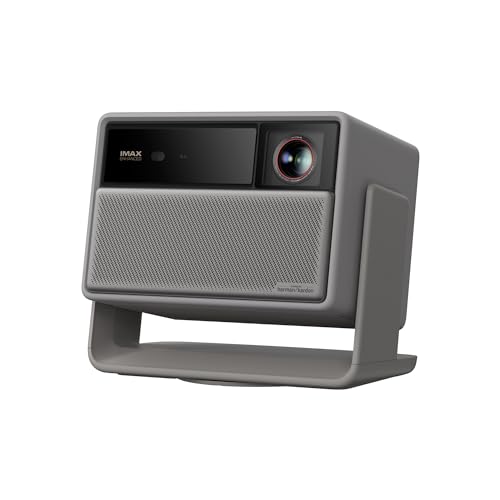
Hisense Triple Laser 4K Ultra Short Throw Projector
Best for: flexible screen sizes up to 150 inches
- Brightness
- 2500 ANSI Lumens
- Native Resolution
- 4K UHD
- Light Source
- Triple Laser
- Throw Type
- Ultra Short Throw
- Smart Platform
- Google TV
- HDR Format
- Dolby Vision
This ultra-short-throw projector uses a triple-laser light engine to project a 4K UHD image between 80 and 150 inches. You get 2,500 ANSI lumens of brightness, Dolby Vision support, and integrated Google TV for streaming. It suits you if you want a compact unit that projects onto your own wall or screen at flexible sizes.
- Scales projection size from 80 inches up to 150 inches
- Triple-laser light source delivering native 4K UHD resolution
- Supports Dolby Vision HDR and Dolby Atmos audio processing
- Integrated Google TV platform with 4K AI upscaling
- Does not include an ambient light rejecting screen in the box
- 2,500 ANSI lumens brightness is lower than dedicated bright-room laser TVs
- You want variable screen sizes up to 150 inches from a short throw distance
- You prefer built-in Google TV for direct streaming access
- You already own a projection screen or plan to project onto a wall
- You need a bundled fixed-frame screen included with your purchase
- You require higher output than 2,500 ANSI lumens for daylight viewing
Verdict: Hisense Triple Laser Ultra Short Throw Projector suits home theater setups needing adjustable screen sizing up to 150 inches with Dolby Vision support. It provides native 4K streaming through Google TV in a compact 15.9-pound chassis.
Specifications side by side
| Spec | Hisense 120-Inch Triple-Laser UST Projector | Hisense Triple Laser 4K Ultra Short Throw Projector |
|---|---|---|
| Brightness | 3000 Lumens | 2500 ANSI Lumens |
| Native Resolution | 4K UHD | 4K UHD |
| Light Source | Triple Laser | Triple Laser |
| Throw Type | Ultra Short Throw | Ultra Short Throw |
| Smart Platform | Android TV | Google TV |
| HDR Format | HDR10 | Dolby Vision |
| Resolution | 4K UHD | 4K UHD |
| Audio Format | Dolby Atmos | – |
| Throw Ratio | Ultra Short Throw | Ultra Short Throw |
| Operating System | Android TV | – |
| Screen Material | ALR | – |
| Dimensions | 35 × 21 × 6 inches | 20.5 × 11.1 × 4.7 inches |
| Weight | – | 15.9 pounds |
| Size | 120" | 80"-150" |
| Color | 120L9G | Gunmetal |
| Model | 120L9G | PT1 |
Frequently asked questions
Which projector allows you to adjust the image size?
The Hisense PT1 supports variable projection sizes from 80 inches up to 150 inches. In contrast, the Hisense 120L9G is paired strictly with a fixed 120-inch ambient-light-rejecting screen. This makes the PT1 adaptable for different wall spaces, whereas the 120L9G provides a set viewing dimension.
What smart platforms do these two laser projectors run?
The Hisense PT1 runs on Google TV, while the Hisense 120L9G utilizes Android TV. Both operating systems support native 4K streaming applications directly on the unit. Your choice depends on whether you prefer the content-first interface of Google TV or the classic layout of Android TV.
Do both models support the same HDR formats?
No, they handle different dynamic range formats. The Hisense PT1 supports Dolby Vision for compatible content, while the Hisense 120L9G lists support for HDR10. Both models pair their high dynamic range capabilities with a 4K UHD resolution driven by a triple-laser light source.
Does the Hisense PT1 come with an ambient light rejecting screen?
No, the Hisense PT1 does not include an ambient-light-rejecting screen in the package. Only the Hisense 120L9G comes bundled with a dedicated 120-inch ALR screen. If you select the PT1, you can project directly onto an existing wall or use a separate screen sized up to 150 inches.
How do the physical dimensions and weight compare between models?
The Hisense PT1 has a significantly smaller chassis measuring 20.5 inches long, 11.1 inches wide, and 4.7 inches high, weighing 15.9 pounds in gunmetal. The Hisense 120L9G console is substantially larger, measuring 35 inches long, 21 inches wide, and 6 inches high on your media console.
Do both the Hisense 120L9G and PT1 use the same type of light source?
Yes, both models utilize a triple-laser light source. This projection design delivers 4K UHD resolution using ultra short throw ratios. While both share RGB triple-laser illumination, the 120L9G rates at 3,000 lumens, whereas the PT1 focuses on flexible diagonal sizing from 80 to 150 inches.
See also
Prices and specifications above are read from the product page and can change without notice. Scores are out of 10, based on listed specifications and buyer feedback; nothing on this page comes from handling the product.