
As Amazon Associates, we earn from qualifying purchases. This means we may receive a small commission at no extra cost to you if you click through and make a purchase.
As an Amazon Associate we earn from qualifying purchases. Links on this page are affiliate links.
Finding the best 120Hz projectors requires balancing fluid frame rates with light output and resolution. To help you evaluate your options, we compared 5 models using only the specifications published on the listings.
The ViewSonic WXGA 4000-Lumen DLP Projector leads the rankings because its 4,000 ANSI lumens and 16ms response time deliver reliable motion clarity in bright rooms. This guide helps you decide which display technology, throw ratio, and light source match your room setup and media equipment.
Match projector resolution to your content
While every model runs at 120Hz, resolutions differ significantly across display types. The ViewSonic DLP model uses WXGA resolution for business spaces, whereas the Epson Home Cinema LS6000 pairs 4K UHD with a laser light source. You should confirm the resolution matches your media needs before choosing a fast 120Hz display.
| # | Product | Best for | Price |
|---|---|---|---|
| 1 | ViewSonic WXGA 4000-Lumen DLP Projector Best overall | bright spaces needing fast 120Hz refresh rates | |
| 2 | Epson Home Cinema 4K 3LCD Projector Best premium | dedicated theaters needing motorized optics and 120Hz | |
| 3 | Epson Home Cinema LS6000 4K Laser Projector Best budget | high-brightness 120Hz console gaming | |
| 4 | JMGO IRIS Ultra 4K Triple Laser Projector Best google tv | integrated Google TV and bright 4K gaming | |
| 5 | Optoma Short Throw Gaming Projector Best gaming | fast-paced gaming in compact spaces |
The best fit for you
- You need high brightness in a lit room – ViewSonic WXGA 4000-Lumen DLP Projector – Its 4,000 ANSI lumens and 120Hz refresh rate maintain clear visibility in illuminated spaces.
- You want built-in streaming without external devices – JMGO IRIS Ultra 4K Triple Laser Projector – It integrates the Google TV platform alongside 4K UHD resolution and a 120Hz refresh rate.
- You have a compact room for gaming – Optoma Short Throw Gaming Projector – Its short throw design lets you project 120Hz gaming visuals from close distances.
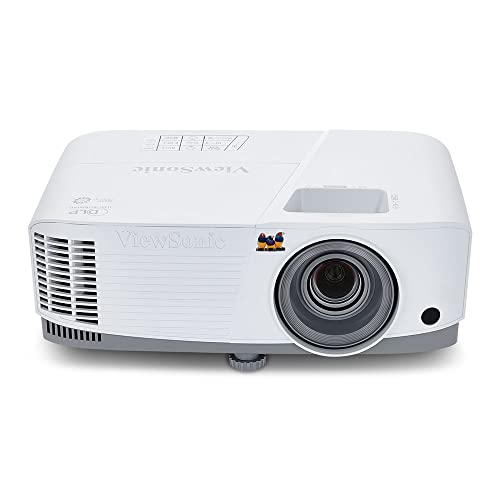
ViewSonic WXGA 4000-Lumen DLP Projector
Best for: bright spaces needing fast 120Hz refresh rates
- Refresh Rate
- 120Hz
- Brightness
- 4,000 ANSI lumens
- Native Resolution
- WXGA (1280x800p)
- Light Source
- Lamp
- Display Technology
- DLP
- Use
- Business
This DLP projector pairs a 120Hz refresh rate with 16ms input latency for fluid motion handling. Its lamp outputs 4,000 ANSI lumens, maintaining image clarity in spaces with moderate ambient light. With native WXGA resolution and projection sizes from 80 to 150 inches, it suits you if you need fast frame rates for presentations in lit rooms.
- 4,000 ANSI lumens brightness for ambient lighting
- 120Hz refresh rate with 16ms low input latency
- 80 to 150-inch projection image capability
- 1.1x optical zoom with vertical keystone correction
- Native resolution limited to WXGA (1280×800)
- Uses a conventional lamp instead of a laser light source
- Requires 11 feet of throw distance for a 100-inch image
- You need 4,000 ANSI lumens to display content in moderate ambient light.
- You want 120Hz refresh rates and 16ms latency for fast-paced content.
- You require native 1080p or 4K resolution.
- You prefer a solid-state laser light source.
Verdict: ViewSonic High-Brightness WXGA DLP Projector provides 4,000 ANSI lumens and 120Hz motion clarity for illuminated rooms and presentations. It fits anyone who prioritizes fluid 16ms response and high light output over 1080p or 4K pixel density.

Epson Home Cinema 4K 3LCD Projector
Best for: dedicated theaters needing motorized optics and 120Hz
- Refresh Rate
- 120Hz
- Brightness
- 2,500 Lumens (ISO Rated)
- Native Resolution
- 4K PRO-UHD
- Light Source
- Laser array
- Display Technology
- 3-Chip 3LCD
- HDR Format
- HDR, HDR10, HDR10+, HLG
The Epson Home Cinema LS11000 is a 4K 3-chip 3LCD laser projector built for high-frame-rate home theater setups. It delivers 120Hz support over dual HDMI ports, 2,500 lumens of color and white brightness, and advanced HDR10+ handling with a 1,200,000:1 dynamic contrast ratio. This projector suits you if you want motorized optics and smooth 120Hz motion in a light-controlled media room.
- Dual HDMI ports supporting refresh rates up to 120Hz and eARC audio passthrough
- Motorized lens shift with ±96% vertical and ±47% horizontal adjustment plus 10 presets
- Full 10-bit color processing supporting HDR, HDR10, HDR10+, and HLG
- 1,200,000:1 dynamic contrast ratio powered by a laser array light source
- 2,500 ISO lumens brightness is lower than many competing high-output models
- Large and heavy enclosure weighing 28 pounds and measuring 20.5 inches wide
- You want 120Hz playback paired with motorized zoom, focus, and lens shift memory
- You watch HDR10+ content in a light-controlled home theater setup
- You need a portable or compact unit under 28 pounds
- You require more than 2,500 lumens to counter bright ambient room lighting
Verdict: Epson Home Cinema LS11000 4K Laser Projector gives dedicated home theater owners precision motorized optics, 120Hz refresh capabilities, and comprehensive HDR10+ color processing.

Epson Home Cinema LS6000 4K Laser Projector
Best for: high-brightness 120Hz console gaming
- Refresh Rate
- 120Hz
- Brightness
- 3,400 ISO Lumens
- Native Resolution
- 4K UHD
- Light Source
- Laser array
- Display Technology
- 3-Chip 3LCD
- HDR Format
- HDR10, HLG
The Epson Home Cinema LS6000 is a 4K laser projector built for gaming and home theater setups. It delivers 3,400 lumens of color and white brightness using a 3-chip 3LCD engine. Dual HDMI inputs support a 120Hz refresh rate alongside Auto Low Latency Mode for sub-20ms response times. It suits gamers seeking fast playback on screens up to 300 inches.
- Dual HDMI ports support up to 120Hz refresh rates with ALLM
- Sub-20ms input lag provides responsive gaming performance
- Laser light engine delivers 3,400 lumens of color and white brightness
- Manual lens shift provides ±59% vertical and ±21% horizontal range
- Lens shift adjustments are manual rather than motorized
- Provides only two HDMI input ports for connected hardware
- You connect modern gaming consoles that use 120Hz output with sub-20ms input lag.
- You need 3,400 lumens of brightness to overcome ambient light in a living room.
- You require physical horizontal and vertical lens shift to position your image off-center.
- You require motorized lens controls for adjusting focus and shift from a remote.
- You have more than two media devices to connect directly without a switch.
Verdict: Epson Home Cinema LS6000 4K Laser Projector delivers smooth 120Hz playback and high laser brightness for daytime living rooms and media spaces. It gives console players low-latency big-screen output without requiring a pitch-black room.

JMGO IRIS Ultra 4K Triple Laser Projector
Best for: integrated Google TV and bright 4K gaming
- Refresh Rate
- 120Hz
- Brightness
- 4,500 ISO lumens
- Light Source
- Triple Laser
- Smart Platform
- Google TV
- HDR Format
- Dolby Vision
- Resolution
- 4K UHD
This triple-laser projector delivers native 4K resolution at a 120Hz refresh rate, backed by 4,500 ISO lumens of brightness. Built-in Google TV gives you streaming apps without external dongles, while dual HDMI 2.1 ports handle high-frame-rate gaming. It suits you if you want bright ambient-light viewing, responsive console gaming, and integrated streaming in one setup.
- Supports 4K at 120Hz and 1080p at 240Hz via dual HDMI 2.1 inputs
- 4,500 ISO lumens output from an RGB triple-laser light source
- Built-in Google TV with direct streaming apps and Google Cast
- Flexible setup with 0.88–1.7:1 optical zoom and physical lens shift
- Chassis weighs 15.3 pounds, making mounting more demanding
- Coverage is limited to a one-year manufacturer warranty
- You want 4K 120Hz console gaming with VRR, ALLM, and low input lag.
- You want Google TV streaming apps integrated directly into the projector.
- You project in rooms with ambient light requiring 4,500 ISO lumens.
- You need a lightweight, portable projector under 15 pounds.
- You prefer a projector backed by a multi-year warranty.
Verdict: JMGO IRIS Ultra 4K Triple Laser Projector suits gamers and movie watchers who want built-in Google TV alongside high-frame-rate 4K playback and high light output.

Optoma Short Throw Gaming Projector
Best for: fast-paced gaming in compact spaces
- Refresh Rate
- 120Hz
- Brightness
- 3,800 Lumens
- Native Resolution
- Full HD 1080p (1920 x 1080)
- Light Source
- Lamp
- Throw Type
- Short Throw
- HDR Format
- HDR10
This Optoma short throw gaming projector delivers a 1080p picture at a 120Hz refresh rate with an 8.4ms response time. Its short-throw lens projects a 120-inch image from four feet away, paired with 3,800 lumens of brightness and HDR10 support. You get fast motion handling designed specifically for console or PC gaming in tighter living spaces.
- 8.4ms response time at 1080p 120Hz
- Short throw projects 120 inches from four feet
- 3,800 lumens brightness with 50,000:1 contrast ratio
- Lamp life rated up to 15,000 hours
- Native resolution limited to 1080p
- Uses a traditional lamp instead of a laser light source
- You need low input lag for fast 120Hz gaming
- You have limited space and need a 120-inch image from four feet away
- You want native 4K display resolution
- You prefer a solid-state laser light engine
Verdict: Optoma Short Throw 1080p Gaming Projector fits gamers who prioritize high-frame-rate 120Hz responsiveness and short-range projection over 4K sharpness.
Specifications side by side
| Spec | ViewSonic WXGA 4000-Lumen DLP Projector | Epson Home Cinema 4K 3LCD Projector | Epson Home Cinema LS6000 4K Laser Projector | JMGO IRIS Ultra 4K Triple Laser Projector | Optoma Short Throw Gaming Projector |
|---|---|---|---|---|---|
| Brightness | 4,000 ANSI lumens | 2,500 Lumens (ISO Rated) | 3,400 ISO Lumens | 4,500 ISO lumens | 3,800 Lumens |
| Native Resolution | WXGA (1280x800p) | 4K PRO-UHD | 4K UHD | – | Full HD 1080p (1920 x 1080) |
| Light Source | Lamp | Laser array | Laser array | Triple Laser | Lamp |
| Display Technology | DLP | 3-Chip 3LCD | 3-Chip 3LCD | – | – |
| Throw Type | – | – | – | – | Short Throw |
| Smart Platform | – | – | – | Google TV | – |
| HDR Format | – | HDR, HDR10, HDR10+, HLG | HDR10, HLG | Dolby Vision | HDR10 |
| Resolution | WXGA | – | 4K UHD | 4K UHD | 4K UHD |
| Refresh Rate | 120Hz | 120Hz | 120Hz | 120Hz | 120Hz |
| Intended Use | – | – | – | – | Gaming |
| Throw Ratio | – | – | – | – | Short Throw |
| Use | Business | Home Theater | Home Theater | – | – |
| Screen Type | – | Motorized | – | – | – |
| Mounting | Ceiling Mount | – | – | – | – |
| Dimensions | 4.33 × 11.6 × 8.58 inches | 17.6 × 20.5 × 7.6 inches | 16.1 × 13 × 6.5 inches | – | 12.4 × 9.5 × 4.5 inches |
| Weight | 4.85 pounds | 28 pounds | 17.4 pounds | 15.3 pounds | 7.7 pounds |
| Size | 4.3" x 8.6" x 11.6" | – | – | – | – |
| Color | White | White | White | – | White |
| Model | PA503W | V11HA48020 | V11HC38020 | – | GT1080HDRx |
How to Choose a 120Hz Projector
Check the Throw Ratio
You should evaluate throw ratio to determine how far the unit must sit from your screen. Short throw models, like the Optoma Short Throw Gaming Projector, project large images from a short distance. This design helps in compact rooms where ceiling space or room depth is limited. If you have a deeper room, standard throw optics allow placement farther back. Verify room dimensions before selecting a throw ratio.
Review Smart Platform Integration
Consider whether you need an onboard operating system or plan to attach an external media player. Models like the JMGO IRIS Ultra 4K Triple Laser Projector include Google TV, letting you access streaming applications directly without extra hardware. If you already route your video sources through an external receiver or console, an integrated smart platform becomes less critical. Check the listed smart platform specifications before deciding.
Verify HDR Format Support
You should examine High Dynamic Range specifications if you plan to watch modern films or games. Projectors like the Epson Home Cinema LS11000 list HDR10 format support and HDR10+ processing. These profiles allow compatible video signals to display expanded contrast and color detail. Without matching HDR support on the projector, your high-resolution content will display in standard dynamic range. Review the HDR format line on the specification sheet.
Assess Response Time Ratings
A 120Hz refresh rate refreshes images quickly, but input response remains vital for interactive use. Fast millisecond ratings ensure quick transmission between your source device and the screen. The ViewSonic WXGA DLP Projector specifies a 16ms response time, which suits high-speed gaming and real-time interaction. If you only watch movies, response numbers matter less. Always verify both refresh rates and response figures for competitive or fast-paced tasks.
Check Weight and Mounting
You must assess projector weight and dimensions before planning your installation. Compact models weighing under eight pounds can rest on tables or move between rooms easily. Larger hardware, such as the 28-pound Epson Home Cinema 4K 3LCD Projector, demands dedicated ceiling mounts or reinforced shelves. Review the height, width, depth, and weight figures in the specs table to verify your room setup and brackets can support the equipment safely.
Frequently asked questions
What makes a 120Hz projector beneficial for fast-paced video games?
A 120Hz projector updates frames twice as fast as standard 60Hz displays. This higher refresh rate reduces motion blur and improves visual responsiveness during quick gameplay. Units like the ViewSonic DLP projector combine this rate with a 16ms response time to ensure inputs feel immediate on your screen.
Can 120Hz projectors display high dynamic range video formats?
Yes, certain models support high dynamic range formats alongside high frame rates. The Epson Home Cinema LS11000 processes HDR10 color formats to show wider contrast. When you pair dynamic range support with a 120Hz refresh rate, your theater content maintains smooth movement without sacrificing highlight detail or color accuracy.
How does light source technology affect 120Hz projector performance?
Laser light sources deliver steady brightness and color consistency for extended viewing sessions. Models such as the JMGO IRIS Ultra feature a triple laser engine that maintains clear 4K visuals at 120Hz. Unlike traditional lamps, laser systems power on rapidly and provide stable illumination across long gaming or movie marathons.
Which display technology is common among 120Hz home projectors?
DLP and 3LCD are the two primary display technologies used in these projectors. DLP systems switch individual pixels quickly, while 3LCD units like the Epson LS6000 route light through three separate liquid crystal chips. Both display methods effectively handle 120Hz signals, letting you pick based on your room setup.
Can you mount a 120Hz projector to the ceiling?
Yes, many 120Hz units include mounting options suited for ceiling hardware. The ViewSonic PA503W supports ceiling installation to keep floor space clear while projecting its 4,000 ANSI lumens. You should check the chassis weight before installing, as models range from under five pounds to 28 pounds.
Do all 120Hz projectors require external media streaming boxes?
No, select 120Hz projectors feature integrated operating systems directly on the hardware. The JMGO IRIS Ultra includes Google TV, allowing you to run streaming services without extra adapters. Projectors without built-in operating systems require external streaming sticks, gaming consoles, or media computers connected through their video ports.
How does projector weight influence your installation options?
Unit weight dictates what brackets, shelves, or stands you can safely use. Compact options like the Optoma gaming model weigh 7.7 pounds, making table placement easy. In contrast, heavier 28-pound models like the Epson LS11000 require heavy-duty ceiling mounts or sturdy theater shelving to hold their larger optical assemblies.
See also
Prices and specifications above are read from the product page and can change without notice. Scores are out of 10, based on listed specifications and buyer feedback; nothing on this page comes from handling the product.


